Coffee Process

Honey Process Coffee Beans

Find honey process specialty coffees with current roaster availability, origins, flavours and prices. There are currently 24 matching coffees in RoastSearch.

View 24 coffeesFilter and sort choices stay in this page’s canonical URL.

Honey coffees

Sorted with featured coffees first.

Showing 24 of 24 coffees

Las Lajas
Cartwheel Coffee
ChocolateyNutty Fruity BrightJuicy BoozyExperimental
Producer Oscar & Francisca Chacón
Process Honey
Variety Caturra, Catuai

Oscar and Francisca Chacón inherited this family farm from their grandparents and is currently run by 6 brothers and sisters and their mother. This couple is one of the first coffee growing families in Costa Rica to produce Honey and Natural Process specialty coffee, following an earthquake in 2008, wide-spread electricity/water shortages lead them to take inspiration from African processes - building raised beds for drying, which led to new ways of processing their coffee. Through experimentation, these innovative processing led to the well-sought-after honey lots that Costa Rica is renowned for.

£16.00 / 250g£6.40/100g
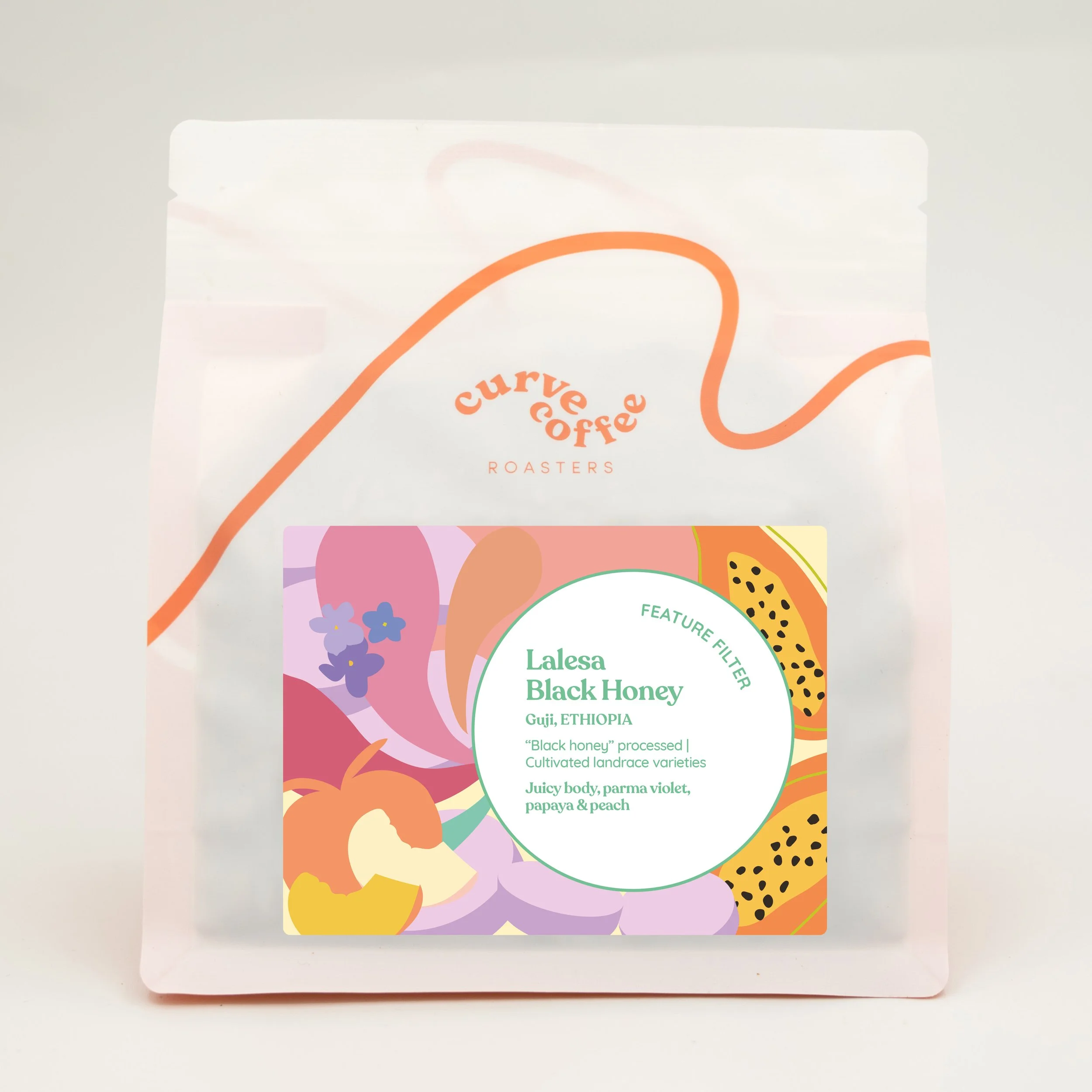
FEATURE FILTER | Lalesa (Black Honey) | Ethiopia
Curve Coffee Roasters
Violet FloralsBlueberriesNectarines
Process Honey
BrewFilter

“Black honey” processed lot of local landrace varieties produced at Lalesa processing site owned and run by the Ephtah coffee exporters team. Cherries are first left to oxidise for one day before being de-pulped and then dried on raised beds for 25 days. Jammy body, violet florals, blueberries & nectarines Great for pourovers, drip filter machines, aeropress and cafetiere. Best enjoyed on its own.

£16.50 / 250g£6.60/100g
Costa Rica: Don Mayo - La Ladera
Hasbean
PeachBrown SugarStrawberry
Producer Micromill: Don Mayo
Process Honey
BrewFilter

Costa Rica: Don Mayo Micromill - La Ladera, Catuai, Honey This dessert in a cup begins with soft, cooked down peach before finishing with a sprinkle of brown sugar. On the aftertaste is a delicate strawberry edge, rounding out this well balanced, all day coffee. Our relationship with the Bonilla Family and their Don Mayo micromill stretches all the way back to 2012, we couldn’t be prouder to still buy Costa Rican coffee from them all these years later. During that time, Don Mayo has gained a huge reputation across the world as a producer of delicious coffee, and this lot is a perfect example of the great cup quality they are famous for. A favourite for us year on year, their Honey processed Catuai. The mountain landscape provides perfect conditions for the production of high-quality specialty coffee beans. The plants thrive in rich, volcanic soils at an ideal average temperature of just under 20°C and the steep slopes providing the right balance of high altitudes for slow cherry maturation and shelter for the delicate Arabica trees. Tarrazú - Iconic For Costa Rican Coffee The Tarrazú canton sits halfway down Costa Rica, towards the western coast. Located in a stunning valley surrounded by mountains that are part of the Talamanca Sierra. It is famous for producing some of the very best coffee in the country, with coffee production being the main industry for local residents, making up a whopping 95% of the local economy. During the harvest in December, January and February, the area’s population triples with seasonal workers needed to bring in the crop. On The Farm La Ladera, located in the Tarrazú region of Costa Rica, is owned by Pablo Bonilla. The farm spans 20 hectares and is situated at an altitude of 1,850 meters, which allows different coffee varieties to thrive at various elevations. Catuai coffee plants grow well at higher elevations, while Caturra is suited to medium and lower areas. In previous years our lots from La Ladera have been a mix of Catuai and Caturra but for the last 2 harvests the varietals were separated and we have been able to buy just the higher growing Catuai crop. The farm emphasises sustainable coffee production by planting native species alongside coffee crops to maintain ecological balance. Additionally, wastewater is treated to prevent pollution, and a small hydroelectric plant is used during peak harvest. La Ladera employs a team of 120-130 pickers during the harvest season, primarily from Panama. The farm has been hiring the same core group of pickers for the last two decades, providing them with transportation and accommodation. At The Mill After harvest, the single origin coffee is processed at the Don Mayo micro mill, also owned by Pablo Bonilla. The Don Mayo micro mill is one of the oldest and most respected micro mills in the country. Established in 2003 by Hector Bonilla and his sons, the mill has been innovative in creating an economically and environmentally sustainable farm-to-mill operation under the Bonilla Family Estate. The mill processes coffee from its own farms, such as La Loma, and also buys whole cherries from local coffee farmers to sell as individual micro-lots. Don Mayo is equipped with state-of-the-art machinery and is committed to producing high-quality coffee. This commitment is demonstrated through the mill’s success in Costa Rica’s Cup of Excellence competition, having auctioned more than 35 lots through the competition and placing first in both 2009 and 2020. Environmental conservation is a key focus at Don Mayo. The mill minimises water usage due to government restrictions and uses coffee pulp and parchment as fuel for cooking and mechanical dryers, as well as fertiliser. This approach ensures that nothing goes to waste and supports sustainable coffee production. Traceability Country: Costa Rica Zone: Los Santos Province: San José Canton: Leon Cortes Farm: La Ladera Micromill: Don Mayo Producer: Pablo Bonilla Variety: Catuai Process: Honey Elevation: 1,850-1,900 m.a.s.l. Cupping Scores Tasting notes: Peach, brown sugar, strawberry. Cup of Excellence Cupping Scores Clean Cup: (1-8): 6 Sweetness: (1-8): 6.5 Acidity: (1-8): 6 Mouthfeel: (1-8): 6 Flavour: (1-8): 6.5 Aftertaste: (1-8): 6.5 Balance: (1-8): 6.5 Overall: (1-8): 6 Correction: (+36): +36 Total (max 100): 86 If you'd like to find out more about how we score coffees, make sure to read our blog post “What Do Coffee Cupping Scores Actually Mean?” and if you'd like to try cupping yourself, we've got a guide to that too! What is Coffee Cupping. Roast Information Medium - Through the gap and don't let this go too far towards second, let the simple sweetness shine.

£11.95 / 220g£5.43/100g
Nicaragua: Limoncillo, Red Caturra, Honey
Hasbean
Orange CandyWhite GrapeGreengage
Process Honey
Variety Red Caturra

Nicaragua: Limoncillo, Red Caturra, Honey This super sweet cup is like orange candy, with a gentle white grape developing alongside and a little shoulder of greengage on the finish. The coffee we have here hails from the Matagalpa region of Nicaragua, grown and processed for us by our good friends the Mierisch family. This is one of our longest continuing producer relationships as we’ve been buying coffee from their farm, Finca Limoncillo, since 2007, and we foresee that continuing for many years yet. The second single origin coffee we’re releasing from this year’s harvest is a Honey-processed Red Caturra. On The Farm All of the Mierisch family's Nicaraguan coffee farms are sprinkled across the Jinotega and Matagalpa regions in the northwest of the country. They’re dotted on either side of the mountain range that forms the border between the two departments. When Roland travels to visit the farms, he’ll generally see Limoncillo on the same day as La Huella and Mama Mina, as they are close to one another. The journey typically starts at Mama Mina, continues through La Huella, and finishes at Limoncillo, the largest of the three farms. Finca Limoncillo is a premium coffee farm and jewel of the Mierisch family, nestled at 1,200 metres above sea level in the lush mountains of Matagalpa, Nicaragua. Spanning 171 hectares, 109 of which are dedicated to coffee cultivation, the farm is known not only for its breathtaking landscape, with nine waterfalls crossing its terrain, but also for its role as a benchmark in Nicaraguan specialty coffee. Owned by the highly respected Mierisch family, known for their experimental processing, varietal work, and exceptional coffees, Limoncillo is home to a wide range of varietals including Caturra, Red Bourbon, Pacamara, and Java. People The very first Mierisch farm was founded in 1895 by German émigré Ernst Bruno Mierisch Boettiger. He was compensated by the Nicaraguan government for his engineering work on the construction of the Pacific railroad between Masaya and Diriamba with a parcel of land, including a goldmine and a farm he named "Sajonia" (the Spanish spelling of his home region in Germany, Saxony). In 1908 he planted his first coffee tree. Today, Fincas Mierisch operates nine coffee farms in Nicaragua and three in Honduras. More than 100 years later, the family business is run by his grandson, Dr. Erwin Mierisch Buitrago (third generation), and great-great-grandson Erwin "Wingo" Mierisch Jackman (fifth generation). Wingo has been involved with the farms since 2017, contributing to everything from post-harvest processing to roasting, cupping, and green coffee sales. His passion for innovation and research has led him to head the development of new post-harvest processing methods at the mill and refine quality control protocols to increase both quality and consistency. With Wingo’s input, the team at the Don Esteban mill have heavily invested in processing experimentation. Erick Lopez is the Head Agronomist of the Mierisch farms. He started his career at entry level 22 years ago, working in the fields. Recognising his talent and commitment, the family promoted him and funded further education, enabling him to progress into his current leadership role. He now oversees much of the day-to-day operation of the farms. The Fincas Mierisch team includes many employees who have worked with the family for years, and their expertise and dedication make the high quality of both product and service possible. The family employ more than 3,000 staff during harvest, and at Limoncillo over 60 families live on the farm full-time. They are genuinely loved by the people who work for them. More than any other producer we buy from, there is a clear sense of mutual respect and appreciation between the family and their workers. The fact that the Mierisch family are our friends allows us to see the finer details of how they care for their team, continually reinforcing our belief that good people grow good coffee. Sustainable Coffee Beans The family have numerous policies and initiatives in place to make their operations as sustainable as possible. Chemical use is kept to a minimum, and environmental impact is carefully managed through thoughtful land stewardship. In 2024, the farm completed a 15 kW hydroelectric plant, furthering its commitment to sustainability by supplying renewable energy to both farm operations and the 60 on-site families who live and work there. Alongside its coffee-growing areas, the estate also supports cattle and horses, while large sections of preserved forest help maintain biodiversity. The Mierisch family’s commitment to social responsibility is equally impressive. They provide housing, meals, childcare, education, and healthcare for workers year-round, and pay wages that exceed the local minimum by 30%. Precision Processing The Don Esteban mill, located on Finca Limoncillo, is the central processing hub for the Mierisch family’s farms in the Matagalpa region. Named in honour of the family patriarch, the mill is engineered with precision and flexibility in mind, allowing the team to adapt processing methods to suit each varietal and lot. Coffee cherries are carefully hand-picked before being depulped using state-of-the-art eco-pulpers, which significantly reduce water usage while offering precise control over the amount of mucilage left on the bean. Depending on the desired outcome, whether washed, natural, or honey processed, coffees are either fermented in tiled tanks or dried slowly on covered African-style raised beds. This approach allows for clean, traceable expressions of origin and varietal character. To read all about Honey processing, check out our article here: Pulped Natural & Honey Processed Coffee Explained Traceability Country: Nicaragua Region: Matagalpa Municipality: Yasica Norte Farm: Limoncillo Producers: The Mierisch Family Farm Size: 171 hectares Coffee Growing Area: 109 hectares Protected Rainforest: 54 hectares Varietal: Red Caturra Process: Honey Elevation: 1,200 m.a.s.l. Harvest Months: October-February Diurnal Temperature Cycle: Avg High 25°C, Low 17°C Awards: Cup of Excellence 2008 (2nd Place) Cupping Scores Cupping Notes: Orange Candy, White Grape, Greengage Cup of Excellence Cupping Scores Clean Cup: 6.5/8 Sweetness: 7/8 Acidity: 6/8 Mouthfeel: 6.5/8 Flavour: 6.5/8 Aftertaste: 6/8 Balance: 6.5/8 Overall: 6/8 Correction: +36 Total: 87/100 If you'd like to find out more about how we score coffees, make sure to read our blog post “What Do Coffee Cupping Scores Actually Mean?” and if you'd like to try cupping yourself, we've got a guide to that too! What is Coffee Cupping. Roasting Information Medium Dark - Through the gap and let this develop a little, paying close attention to the heat and dropping before second crack.

£11.95 / 220g£5.43/100g
Costa Rica, Labrador Gesha
Kiss the Hippo
Maple SyrupDried Mango
Producer Matías Monge
Process Honey
Altitude 1,950 masl

Producer Matías Monge Farm/Mill Hacienda San Isidro Labrador Location Copey, Dota, Costa Rica Altitude 1,950 masl Process Red Honey Cultivar Gesha Harvest April 2026 Expect notes of Maple Syrup, Dried Mango, Hops Hacienda San Isidro Labrador returns from Matías Monge, high in the microclimate of Copey, Dota, at 1,950 metres. The Monge family have a long record at the top of Costa Rican coffee, and Matías took a Top 3 place at Cup of Excellence with his Gesha. This lot is processed as a red honey, dried with a good share of the sticky mucilage still on the seed, which builds sweetness and weight without losing the variety's clarity. Expect maple syrup, dried mango and a curious hop-like lift on the finish.

£28.00 / 150g£18.67/100g
Ethiopia, Haro Sorsa
Kiss the Hippo
JasmineBlueberry
Producer Abebe Mitiku, outgrower partner of Dimtu Coffee Industry since 2015
Process Honey
Altitude 2,100 - 2,300 masl

Producer Abebe Mitiku, outgrower partner of Dimtu Coffee Industry since 2015 Farm/Mill Abebe Mitiku's farm, 4 hectares. Processed by Dimtu Coffee Location Haro Sorsa village, Hambela Wamena, East Guji, Oromia Region, Ethiopia Altitude 2,100 - 2,300 masl Process Honey Cultivar Ethiopian Heirloom Harvest November - December Expect notes of Jasmine, Blueberry, Toffee Abebe Mitiku farms four hectares at Haro Sorsa, in the Hambela Wamena district of East Guji, and has supplied red cherry to Dimtu Coffee since 2015. His heirloom trees sit between 2,100 and 2,300 metres on rich volcanic soil. At that altitude the cherry matures slowly, developing the delicate florals and ripe fruit for which Ethiopia is celebrated. Selectively picked, then dried with the mucilage intact, a honey process that layers additional sweetness over that foundation. Certified organic and Rainforest Alliance. Jasmine and blueberry over a soft toffee sweetness, bright and delicate.

£14.40 / 250g£5.76/100g
Costa Rica: Don Mayo - La Ladera
Ozone Coffee
PeachBrown SugarStrawberry
Producer Micromill: Don Mayo
Process Honey
BrewFilter

Costa Rica: Don Mayo Micromill - La Ladera, Catuai, Honey This dessert in a cup begins with soft, cooked down peach before finishing with a sprinkle of brown sugar. On the aftertaste is a delicate strawberry edge, rounding out this well balanced, all day coffee. Our relationship with the Bonilla Family and their Don Mayo micromill stretches all the way back to 2012, we couldn’t be prouder to still buy Costa Rican coffee from them all these years later. During that time, Don Mayo has gained a huge reputation across the world as a producer of delicious coffee, and this lot is a perfect example of the great cup quality they are famous for. A favourite for us year on year, their Honey processed Catuai. The mountain landscape provides perfect conditions for the production of high-quality specialty coffee beans. The plants thrive in rich, volcanic soils at an ideal average temperature of just under 20°C and the steep slopes providing the right balance of high altitudes for slow cherry maturation and shelter for the delicate Arabica trees. Tarrazú - Iconic For Costa Rican Coffee The Tarrazú canton sits halfway down Costa Rica, towards the western coast. Located in a stunning valley surrounded by mountains that are part of the Talamanca Sierra. It is famous for producing some of the very best coffee in the country, with coffee production being the main industry for local residents, making up a whopping 95% of the local economy. During the harvest in December, January and February, the area’s population triples with seasonal workers needed to bring in the crop. On The Farm La Ladera, located in the Tarrazú region of Costa Rica, is owned by Pablo Bonilla. The farm spans 20 hectares and is situated at an altitude of 1,850 meters, which allows different coffee varieties to thrive at various elevations. Catuai coffee plants grow well at higher elevations, while Caturra is suited to medium and lower areas. In previous years our lots from La Ladera have been a mix of Catuai and Caturra but for the last 2 harvests the varietals were separated and we have been able to buy just the higher growing Catuai crop. The farm emphasises sustainable coffee production by planting native species alongside coffee crops to maintain ecological balance. Additionally, wastewater is treated to prevent pollution, and a small hydroelectric plant is used during peak harvest. La Ladera employs a team of 120-130 pickers during the harvest season, primarily from Panama. The farm has been hiring the same core group of pickers for the last two decades, providing them with transportation and accommodation. At The Mill After harvest, the single origin coffee is processed at the Don Mayo micro mill, also owned by Pablo Bonilla. The Don Mayo micro mill is one of the oldest and most respected micro mills in the country. Established in 2003 by Hector Bonilla and his sons, the mill has been innovative in creating an economically and environmentally sustainable farm-to-mill operation under the Bonilla Family Estate. The mill processes coffee from its own farms, such as La Loma, and also buys whole cherries from local coffee farmers to sell as individual micro-lots. Don Mayo is equipped with state-of-the-art machinery and is committed to producing high-quality coffee. This commitment is demonstrated through the mill’s success in Costa Rica’s Cup of Excellence competition, having auctioned more than 35 lots through the competition and placing first in both 2009 and 2020. Environmental conservation is a key focus at Don Mayo. The mill minimises water usage due to government restrictions and uses coffee pulp and parchment as fuel for cooking and mechanical dryers, as well as fertiliser. This approach ensures that nothing goes to waste and supports sustainable coffee production. Traceability Country: Costa Rica Zone: Los Santos Province: San José Canton: Leon Cortes Farm: La Ladera Micromill: Don Mayo Producer: Pablo Bonilla Variety: Catuai Process: Honey Elevation: 1,850-1,900 m.a.s.l. Cupping Scores Tasting notes: Peach, brown sugar, strawberry. Cup of Excellence Cupping Scores Clean Cup: (1-8): 6 Sweetness: (1-8): 6.5 Acidity: (1-8): 6 Mouthfeel: (1-8): 6 Flavour: (1-8): 6.5 Aftertaste: (1-8): 6.5 Balance: (1-8): 6.5 Overall: (1-8): 6 Correction: (+36): +36 Total (max 100): 86 If you'd like to find out more about how we score coffees, make sure to read our blog post “What Do Coffee Cupping Scores Actually Mean?” and if you'd like to try cupping yourself, we've got a guide to that too! What is Coffee Cupping. Roast Information Medium - Through the gap and don't let this go too far towards second, let the simple sweetness shine.

£11.95 / 220g£5.43/100g
Nicaragua: Limoncillo, Red Caturra, Honey
Ozone Coffee
Orange CandyWhite GrapeGreengage
Process Honey
Variety Red Caturra

Nicaragua: Limoncillo, Red Caturra, Honey This super sweet cup is like orange candy, with a gentle white grape developing alongside and a little shoulder of greengage on the finish. The coffee we have here hails from the Matagalpa region of Nicaragua, grown and processed for us by our good friends the Mierisch family. This is one of our longest continuing producer relationships as we’ve been buying coffee from their farm, Finca Limoncillo, since 2007, and we foresee that continuing for many years yet. The second single origin coffee we’re releasing from this year’s harvest is a Honey-processed Red Caturra. On The Farm All of the Mierisch family's Nicaraguan coffee farms are sprinkled across the Jinotega and Matagalpa regions in the northwest of the country. They’re dotted on either side of the mountain range that forms the border between the two departments. When Roland travels to visit the farms, he’ll generally see Limoncillo on the same day as La Huella and Mama Mina, as they are close to one another. The journey typically starts at Mama Mina, continues through La Huella, and finishes at Limoncillo, the largest of the three farms. Finca Limoncillo is a premium coffee farm and jewel of the Mierisch family, nestled at 1,200 metres above sea level in the lush mountains of Matagalpa, Nicaragua. Spanning 171 hectares, 109 of which are dedicated to coffee cultivation, the farm is known not only for its breathtaking landscape, with nine waterfalls crossing its terrain, but also for its role as a benchmark in Nicaraguan specialty coffee. Owned by the highly respected Mierisch family, known for their experimental processing, varietal work, and exceptional coffees, Limoncillo is home to a wide range of varietals including Caturra, Red Bourbon, Pacamara, and Java. People The very first Mierisch farm was founded in 1895 by German émigré Ernst Bruno Mierisch Boettiger. He was compensated by the Nicaraguan government for his engineering work on the construction of the Pacific railroad between Masaya and Diriamba with a parcel of land, including a goldmine and a farm he named "Sajonia" (the Spanish spelling of his home region in Germany, Saxony). In 1908 he planted his first coffee tree. Today, Fincas Mierisch operates nine coffee farms in Nicaragua and three in Honduras. More than 100 years later, the family business is run by his grandson, Dr. Erwin Mierisch Buitrago (third generation), and great-great-grandson Erwin "Wingo" Mierisch Jackman (fifth generation). Wingo has been involved with the farms since 2017, contributing to everything from post-harvest processing to roasting, cupping, and green coffee sales. His passion for innovation and research has led him to head the development of new post-harvest processing methods at the mill and refine quality control protocols to increase both quality and consistency. With Wingo’s input, the team at the Don Esteban mill have heavily invested in processing experimentation. Erick Lopez is the Head Agronomist of the Mierisch farms. He started his career at entry level 22 years ago, working in the fields. Recognising his talent and commitment, the family promoted him and funded further education, enabling him to progress into his current leadership role. He now oversees much of the day-to-day operation of the farms. The Fincas Mierisch team includes many employees who have worked with the family for years, and their expertise and dedication make the high quality of both product and service possible. The family employ more than 3,000 staff during harvest, and at Limoncillo over 60 families live on the farm full-time. They are genuinely loved by the people who work for them. More than any other producer we buy from, there is a clear sense of mutual respect and appreciation between the family and their workers. The fact that the Mierisch family are our friends allows us to see the finer details of how they care for their team, continually reinforcing our belief that good people grow good coffee. Sustainable Coffee Beans The family have numerous policies and initiatives in place to make their operations as sustainable as possible. Chemical use is kept to a minimum, and environmental impact is carefully managed through thoughtful land stewardship. In 2024, the farm completed a 15 kW hydroelectric plant, furthering its commitment to sustainability by supplying renewable energy to both farm operations and the 60 on-site families who live and work there. Alongside its coffee-growing areas, the estate also supports cattle and horses, while large sections of preserved forest help maintain biodiversity. The Mierisch family’s commitment to social responsibility is equally impressive. They provide housing, meals, childcare, education, and healthcare for workers year-round, and pay wages that exceed the local minimum by 30%. Precision Processing The Don Esteban mill, located on Finca Limoncillo, is the central processing hub for the Mierisch family’s farms in the Matagalpa region. Named in honour of the family patriarch, the mill is engineered with precision and flexibility in mind, allowing the team to adapt processing methods to suit each varietal and lot. Coffee cherries are carefully hand-picked before being depulped using state-of-the-art eco-pulpers, which significantly reduce water usage while offering precise control over the amount of mucilage left on the bean. Depending on the desired outcome, whether washed, natural, or honey processed, coffees are either fermented in tiled tanks or dried slowly on covered African-style raised beds. This approach allows for clean, traceable expressions of origin and varietal character. To read all about Honey processing, check out our article here: Pulped Natural & Honey Processed Coffee Explained Traceability Country: Nicaragua Region: Matagalpa Municipality: Yasica Norte Farm: Limoncillo Producers: The Mierisch Family Farm Size: 171 hectares Coffee Growing Area: 109 hectares Protected Rainforest: 54 hectares Varietal: Red Caturra Process: Honey Elevation: 1,200 m.a.s.l. Harvest Months: October-February Diurnal Temperature Cycle: Avg High 25°C, Low 17°C Awards: Cup of Excellence 2008 (2nd Place) Cupping Scores Cupping Notes: Orange Candy, White Grape, Greengage Cup of Excellence Cupping Scores Clean Cup: 6.5/8 Sweetness: 7/8 Acidity: 6/8 Mouthfeel: 6.5/8 Flavour: 6.5/8 Aftertaste: 6/8 Balance: 6.5/8 Overall: 6/8 Correction: +36 Total: 87/100 If you'd like to find out more about how we score coffees, make sure to read our blog post “What Do Coffee Cupping Scores Actually Mean?” and if you'd like to try cupping yourself, we've got a guide to that too! What is Coffee Cupping. Roasting Information Medium Dark - Through the gap and let this develop a little, paying close attention to the heat and dropping before second crack.

£11.95 / 220g£5.43/100g
Finca Gascon • Black Honey • Caturra • Guatemala
Taith Coffee
RaisinAppleChocolate
Producer Finca Gascon
Process Honey
Roast Light
Variety Caturra
Altitude 1500-1700 MASL

Farm - Finca Gascon Origin - Guatemala Process - Black Honey Varietal - Caturra Altitude - 1500-1700 MASL Flavour Notes - Raisin, Apple, Chocolate Best for: Filter + Espresso roast level: Very Light FARM Gildardo Contreras developed an interest in coffee production from an early age, helping his parents harvest and process coffee from approximately 50 Bourbon coffee trees growing in their family garden. This early experience inspired his passion for coffee cultivation and led him to establish his own farm in 2012 after purchasing a property from a relative that produced both avocados and coffee. Over time, Gildardo expanded the farm by acquiring neighbouring parcels, increasing its size to approximately 54 acres. Today, the farm is managed by his son, Felipe Contreras, who focuses on improving coffee quality and refining processing methods. Felipe also works closely with neighbouring producers to share knowledge and encourage higher production standards across the local community. The farm places a strong emphasis on sustainable practices, using natural pest management methods, including a homemade mixture of garlic, chilli, onion, and water to control fumagina (sooty mould). To maintain productivity, around 20% of the coffee parcels are renovated each year, with Bourbon trees gradually being replaced by the SL28 variety, supported by an irrigation system. PROCESS Before harvesting, coffee cherries are carefully assessed through Brix level measurements to identify the ideal parcels and cherries for picking, with target readings ranging between 18–23 degrees. At the end of each day, the harvested coffee is sorted, weighed, and transported to the wet mill, where it undergoes a 48-hour whole cherry fermentation before being depulped and prepared for drying. The coffee is then dried on raised beds under controlled conditions, with parchment removed once the beans reach the ideal moisture content for stable storage. Although the farm has access to Guardiola dryers, they have not been required to date.

£13.00 / 200g£6.50/100g
Gesha Village 26/E-04 • Anaerobic Honey • Illubabor Forest • Ethiopia
Taith Coffee
CaramelHoneysuckle
Producer Gesha Village Block - Gaylee
Process Honey
Roast Light
Variety Gesha
Altitude 1931 - 2040 MASL

Producer - Gesha Village Block - Gaylee Origin - Ethiopia Process - Anerobic Honey Varietal - Geisha Altitude - 1931 - 2040 MASL Flavour Notes - Summer Fruits, Caramel, Honeysuckle roast level: Very Light FARM Gesha Village Coffee Estate lies in Ethiopia’s lush West Omo region, close to the Gori Gesha forest, the birthplace of the renowned Gesha coffee variety. Within the 471-hectare estate, the Gaylee plot sits on the southeastern side at around 1,916–1,982 metres above sea level. Named after the neighbouring Gaylee-Gesha community, the plot is planted primarily with the Illubabor Forest variety. Its high elevation, forest-rich environment and abundant rainfall contribute to coffees with remarkable complexity. Gaylee coffees are often characterised by vibrant fruit, floral and spice notes, with flavours such as lemongrass, hibiscus, jasmine, dried fruit and delicate sweetness PROCESS This process differs from their washed, honey, and natural processing. Before fermentation, freshly harvested cherries are washed and floated 2–3 times, with floaters mechanically removed and only ripe red cherries selected. The cherries are then soaked in clean, cold water for 2–3 hours before being depulped, leaving 100% mucilage on the beans. For fermentation, the producers prepare their own mossto a fermented coffee-fruit juice made by fermenting freshly harvested cherries in 5,000L plastic barrels for 72 hours. The pulped coffee is placed into 200L barrels, with mossto added at a ratio of 1L per 8kg of coffee. The coffee undergoes anaerobic fermentation for 84 hours before being dried in full sun for three days, then in shade until reaching 11% moisture.

£19.00 / 125g£15.20/100g
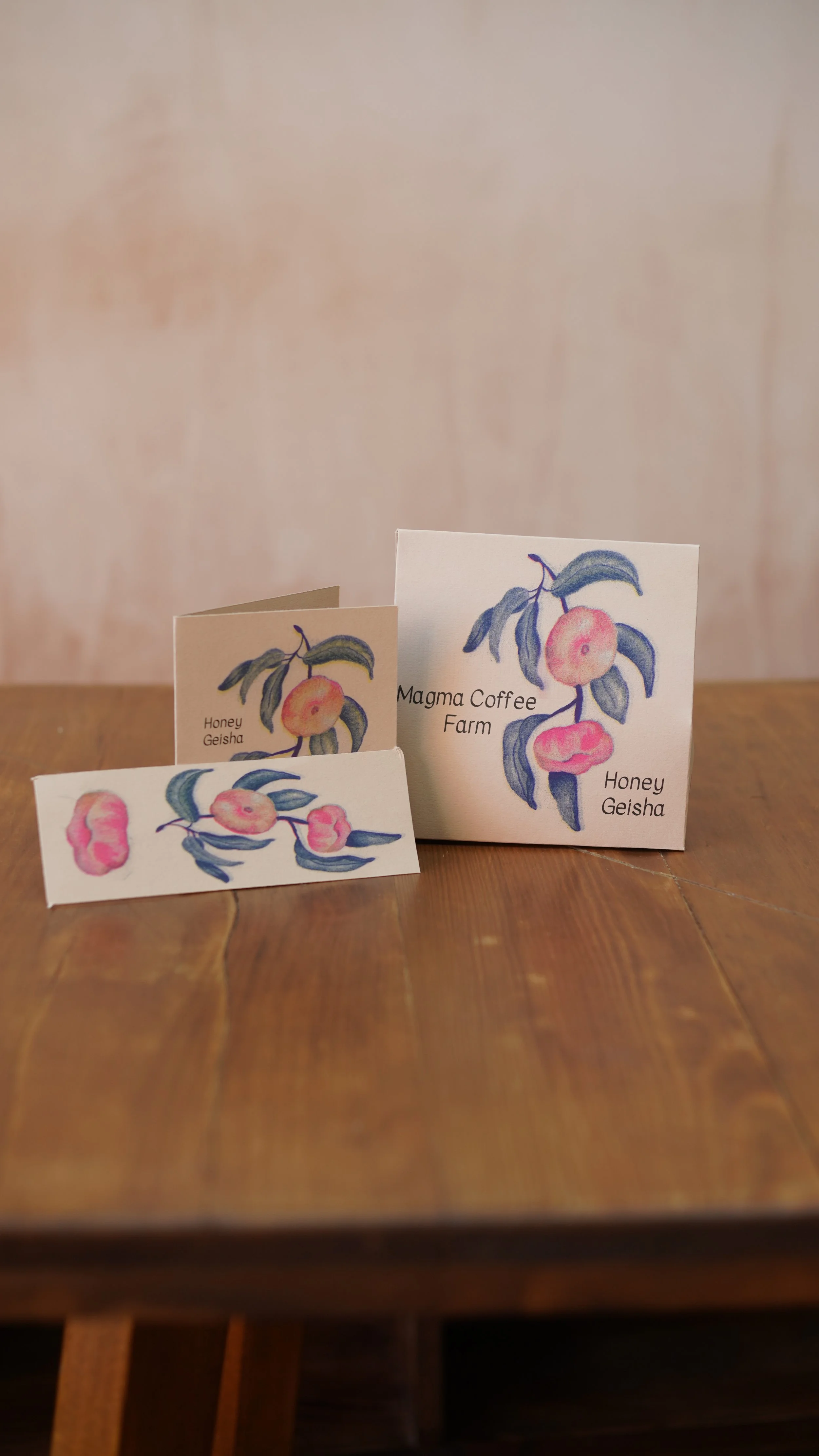
Magma • Honey • Geisha • Panama 100g
Taith Coffee
JasminePeachTangerine
Producer Magma Coffee
Process Honey
Roast Light
Variety Gesha
Altitude 1500-2200 MASL
BrewFilter

Producer - Magma Coffee Origin - Panama Process - Honey Varietal - Geisha Altitude - 1500-2200 MASL Flavour Notes - Jasmine, Peach, Tangerine Best for: Filter roast level: Extremely Light Farm Magma Coffee Plantations was born from a journey that began far from the volcanic mountains of Panama. Founder Dinesh Kumar was raised in a small farming village in India, where agriculture was a way of life. As the son of a farmer, he developed a deep respect for the land, nature, and the dedication required to cultivate something exceptional. After earning his engineering degree, Dinesh began his career in India before relocating to the United States in 1993, where he built a successful business career. Despite his achievements, his passion for farming remained strong. Inspired by the memory of his late father and encouraged by his daughter, he returned to his agricultural roots. In 2020, Dinesh acquired land along the Río Breque in the Cordillera region of Chiriquí, Panama, with a vision of producing world-class specialty coffee. The first Geisha coffee trees were planted in 2021, marking the beginning of Magma Coffee Plantations. Today, the plantation is dedicated to producing exceptional Geisha coffee through sustainable farming and respect for the environment. Nestled in the highlands of Chiriquí, its mineral-rich volcanic soils, high elevations, cool mountain climate, and pure water create ideal growing conditions, allowing the coffee cherries to mature slowly and develop the elegant flavors and floral character that define Panama's finest Geisha coffees..

£50.00 / 100g£50.00/100g
Sebastian Ramirez • Black Honey • Wush Wush • Colombia
Taith Coffee
PlumsTamarind
Producer El Placer
Process Honey
Roast Light
Variety Wush Wush
Altitude 1200-2100 MASL

Producer - El Placer Origin - Colombia Process - Black Honey Varietal - Wush Wush Altitude - 1200-2100 MASL Flavour Notes - Plums, Tamarind, Black Pepper Best for: Filter + Modern Espresso roast level: Light Farm Located in Quindío, Colombia, El Placer Farm is owned and managed by Sebastian Ramirez, a fourth-generation coffee producer renowned for his innovative approach to specialty coffee. Building on generations of family knowledge, Sebastian has become recognised for developing experimental processing methods that highlight the unique character of each coffee variety. His focus on precision fermentation, careful quality control, and continuous experimentation has earned El Placer international acclaim among roasters and baristas. Every lot is produced with meticulous attention to detail, resulting in expressive coffees celebrated for their clarity, complexity, vibrant fruit character, and consistently exceptional cup quality. PROCESS The process begins with the careful selection of cherries, consisting of approximately 95% fully ripe and 5% semi-ripe fruit. After harvesting, the cherries are pulped while retaining an exceptionally high proportion of mucilage on the beans, allowing for an extended anaerobic fermentation that enhances sweetness, depth, and complexity. The coffee is then dried slowly under shaded conditions with minimal turning, ensuring a gradual and even reduction in moisture that develops a rich body while maintaining balance. Once the optimal moisture content is achieved, the coffee is packaged in GrainPro bags and stabilised for 15 days before preparation for export.

£28.00 / 125g£22.40/100g

Explore related browse pages

These links switch to another browse view. The matching coffees for this page are shown above.